
HIDDEN LEAK SIGNS IN BUENA PARK
Water Leak Detection in Buena Park, CA
A hidden water leak doesn’t always announce itself right away. It can show up as a shift in water use, a damp patch that wasn’t there before, a faint odor, or a sound that doesn’t quite make sense. This page explains what is worth noticing, what you can observe without opening walls or flooring, and how a detection visit may help narrow down the likely source.
Information you submit may be reviewed and shared with independent service contractors and campaign partners to help respond to your request. Submitting a request does not guarantee a response, service, price, diagnosis, or outcome.
Signs That May Justify Further Checking
Not every unusual sign points to a leak, but a few patterns are worth paying attention to. None of these confirm anything on their own; they’re simply reasons to look a little closer.
- Higher or unexplained water use. A bill that climbs without a clear reason, or usage that doesn’t match how water is actually being used day to day, can be worth a second look.
- Dampness, staining, or swollen finishes. A patch of flooring, drywall, or trim that looks different than it used to may be picking up moisture from somewhere nearby.
- A musty odor. A smell that lingers in one area and doesn’t clear with normal airing out sometimes points to trapped moisture.
- Water sounds when fixtures are off. Running or trickling water that repeats in the same area when fixtures are not in use may be worth noting.
- Localized warmth. A warm patch of flooring in a home with hot water lines running underneath can occasionally be traced back to a leak, though warmth on its own isn’t conclusive.
- A change in water pressure. A noticeable drop in pressure at one or more fixtures has several possible causes, and a hidden leak is one of them.
Possible Locations for a Hidden Household Leak
A hidden leak isn’t always where people expect. It can turn up under the slab, but plenty of leaks start somewhere else entirely. Here are some of the more common areas worth understanding.
Under Slab or Foundation Areas
Pipes that run beneath the foundation are harder to see and can take more work to pin down. If findings point in this direction, slab leak detection covers that process in more detail.
Behind Walls or Ceilings
A supply line inside a wall or above a ceiling can leak slowly for a while before anything becomes visible on the surface, which is part of why early signs matter.
Under Sinks and Fixtures
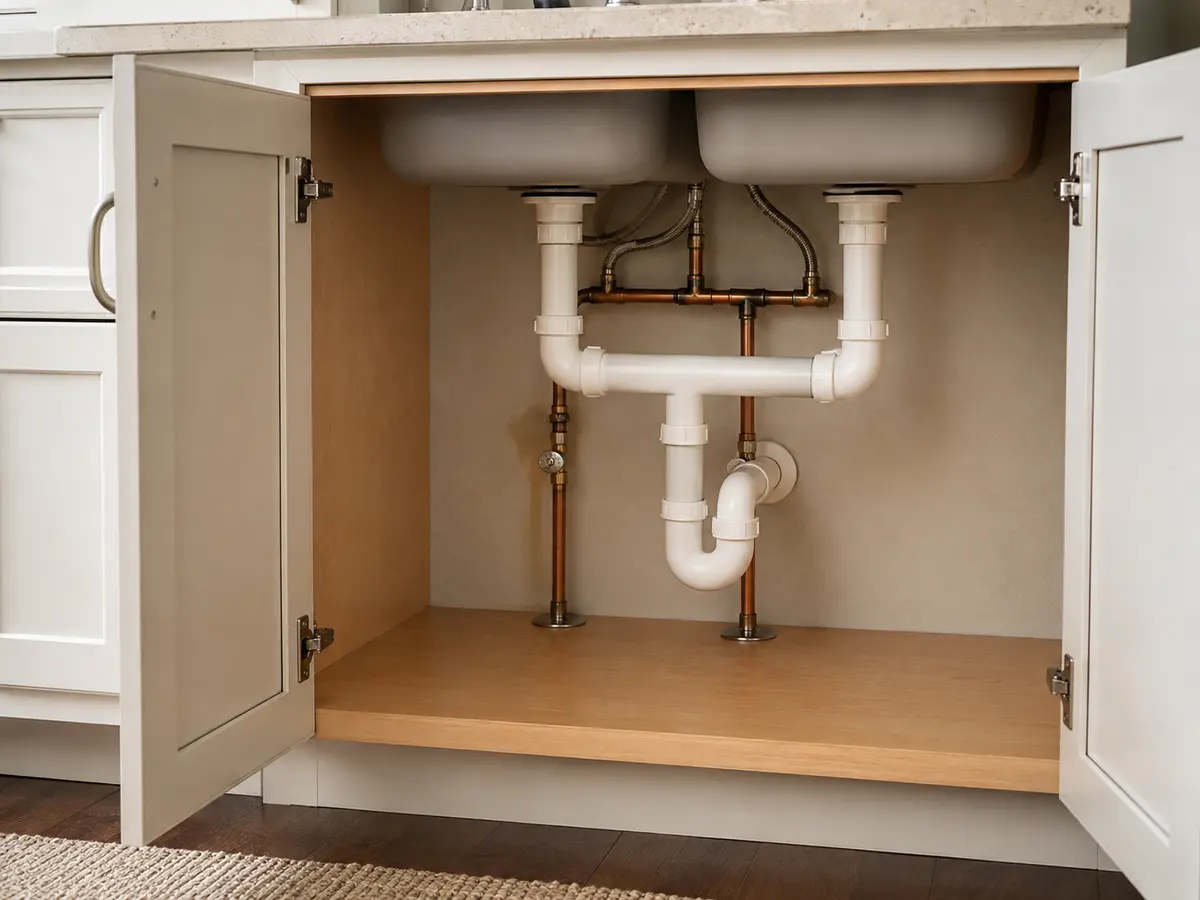
Connections under a sink, around a toilet, or near an appliance are some of the more accessible spots, and often the easiest for a homeowner to check directly.
Water Heater and Connections
The tank, nearby valves, and inlet or outlet connections can sometimes show moisture, staining, or small drips during a careful visual check.
Irrigation and Outdoor Lines
Outdoor irrigation lines and hose bibs sit underground or against exterior walls, so a leak there might only show up as a soggy patch of yard or a meter that keeps moving.
What You Can Safely Check Yourself
A few observations can be made without opening anything up or getting into work that’s best left alone.
Reviewing recent water-use changes. A look back at recent bills or usage history can show whether something shifted, and roughly when.
Listening when fixtures are off. With everything turned off, a quiet walk through the home can reveal whether water is still moving somewhere.
Looking around visible plumbing connections. Areas under sinks, near the water heater, or around exposed pipes can be checked visually for dampness or staining.
Noting when and where a sign appears. Writing down when a smell, sound, or damp spot shows up, and where, can help make sense of the pattern later.
These are simple observations, not repair steps.
Your Water Meter and WaterSmart Resources
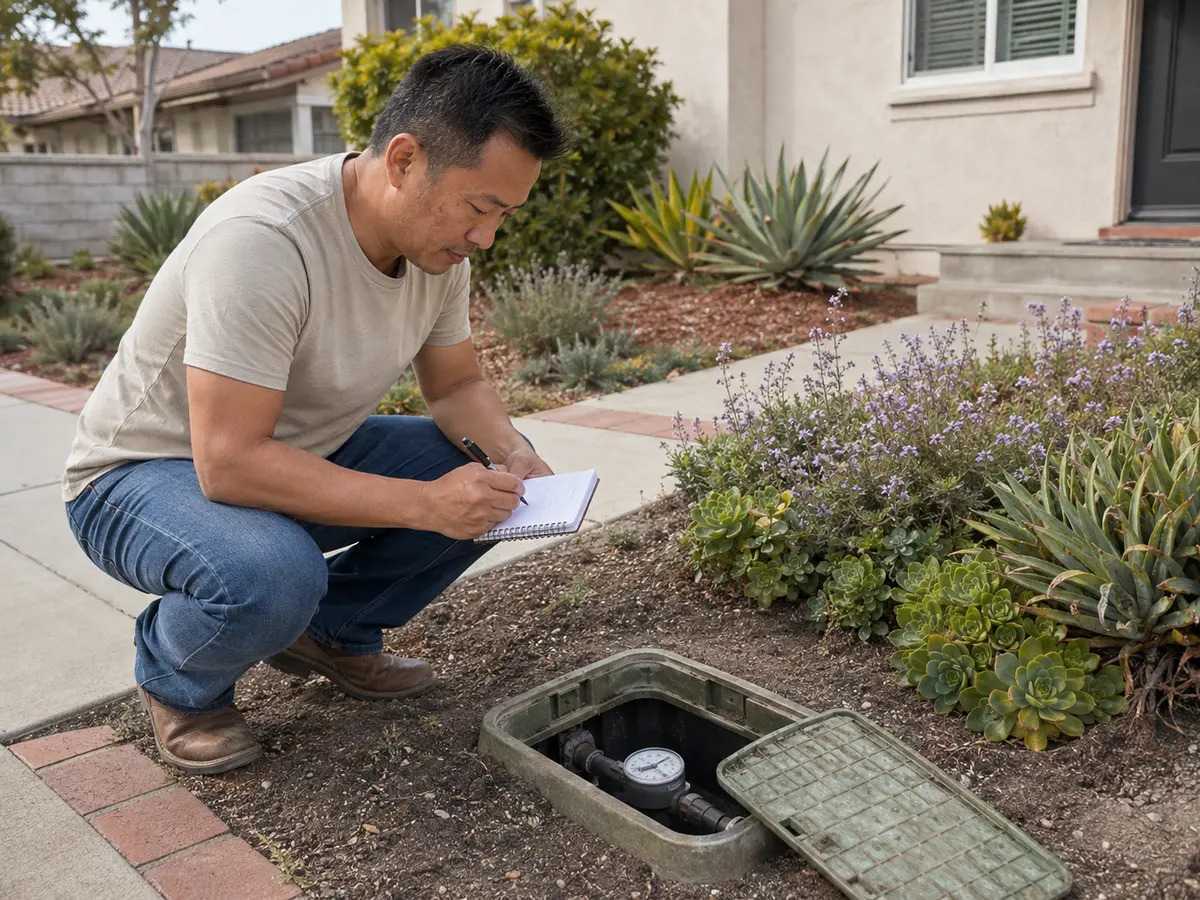
The water meter can add useful context when household water use seems unusual, but it does not identify the source by itself. The water meter leak test guide explains how to review it more carefully without repeating those instructions here. The Buena Park WaterSmart page provides information about the city’s WaterSmart program and related water-use resources.
How Professional Leak Detection May Work
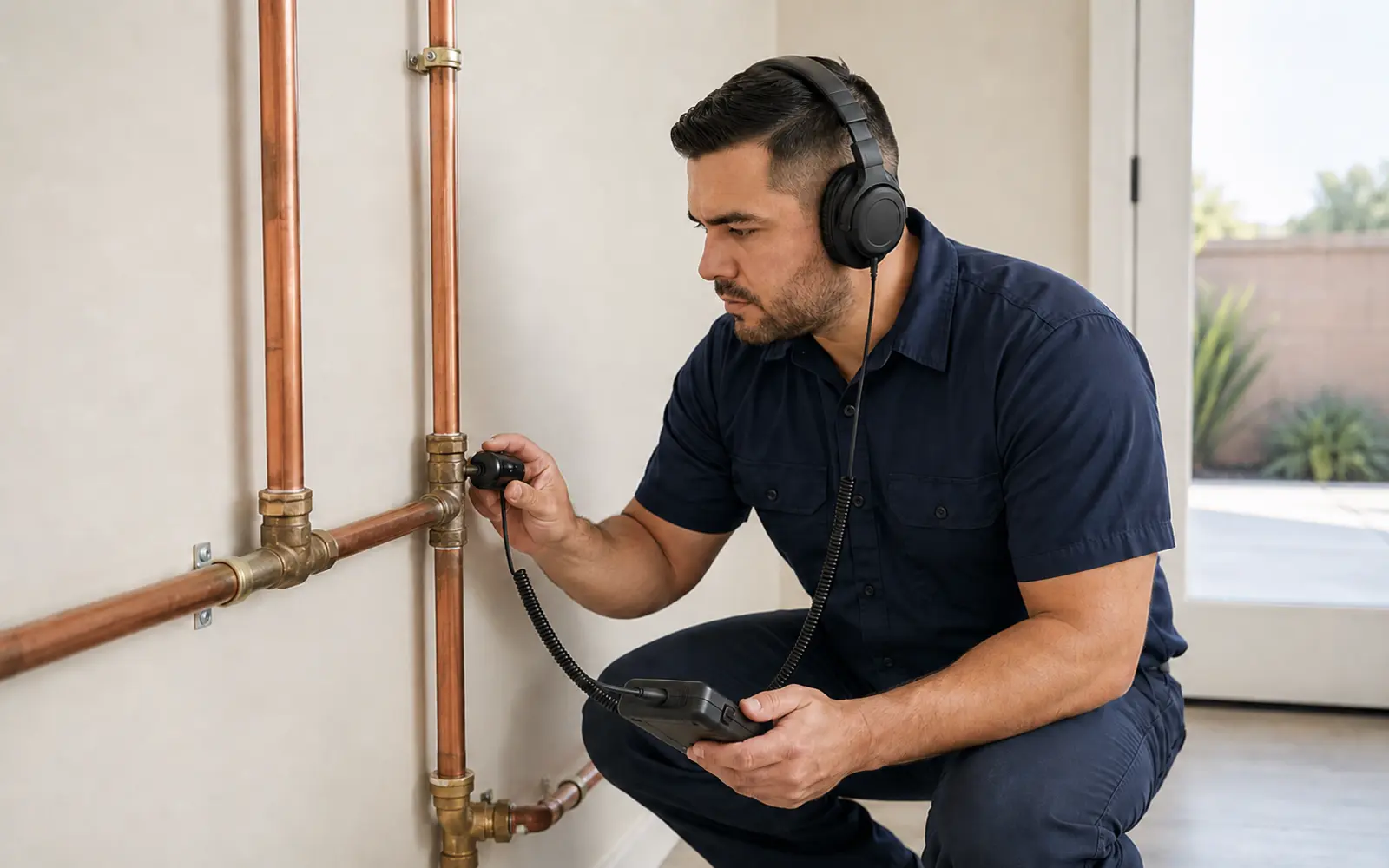
A detection visit may begin by reviewing what has been noticed, including when a sign appeared, where it occurs, and whether water-use patterns changed. Visible conditions and the plumbing layout can then help identify the areas worth checking. Depending on the situation, information from listening equipment, temperature patterns, moisture readings, or other observations may be compared before a likely source is discussed. The how it works page gives a broader overview of what may happen after a request is submitted.
Detection Tools and Their Limitations
A few different tools tend to come up in leak detection work, and each one offers a different kind of information.
Acoustic Listening Equipment
This kind of equipment picks up the sound of water moving through a pipe, which can help narrow down a general area. Background noise, pipe material, and depth can all affect how clearly a sound comes through.
Thermal Imaging
A thermal camera shows temperature patterns on a surface rather than the pipe itself. Under suitable conditions, those patterns may support other observations about where warm water could be present nearby.
Moisture Meters
A moisture meter measures dampness in a material like drywall or flooring, which can help confirm that water is present in an area, though it doesn’t explain where that water came from on its own.
Different tools provide different kinds of information, and how useful each one is can depend on the plumbing layout, the materials involved, the location, and the conditions around it. Findings from one method are often considered alongside other observations, or checked against a second method, before drawing any conclusions.
City-Side Questions and Private-Property Plumbing
City infrastructure and plumbing on private property may be handled differently, and the appropriate contact can depend on where the issue appears. If the location is unclear or seems close to a meter or city connection, Buena Park Public Works FAQs provides the city’s own answers to common utility questions. That resource can help a homeowner decide what to ask next without this page assigning responsibility.
What May Happen After a Leak Is Narrowed Down
Once a likely source has been identified, the findings get reviewed and next steps get discussed with the property owner. Detection on its own doesn’t start any repair work; that’s a separate decision that comes after the findings are in hand. If the source appears to be under the slab, slab leak repair covers what that process may involve. In other cases, the next step depends on where the leak turned out to be and what access it might require.
Has an inspection or plumber already identified a private-property pipe problem? If you now need a plumber for repair, review the pipe leak repair service path.
If the identified issue is a private-property water line, see our confirmed private-property water-line repair help.
Common Questions About Water Leak Detection
Request Help With a Possible Water Leak
If something you’ve noticed matches what’s described here, the contact form is a straightforward way to share what’s going on. A short description of what’s been observed, like when it started and where it seems to be happening, is a helpful starting point.
Information you submit may be reviewed and shared with independent service contractors and campaign partners to help respond to your request. Submitting a request does not guarantee a response, service, price, diagnosis, or outcome.