
SLAB LEAK INFORMATION FOR BUENA PARK
Slab Leak Detection in Buena Park, CA
Warm flooring, unexplained water use, or the sound of water running can point to a hidden line beneath the slab. Detection helps narrow the location before repair decisions are made.
Information you submit may be reviewed and shared with independent service contractors and campaign partners to help respond to your request. Submitting a request does not guarantee a response, service, price, diagnosis, or outcome.
Signs That May Point to a Slab Leak
The first clue is often something small: one area of flooring feels warmer than usual, water use rises without an obvious reason, or water can be heard when fixtures are off. These observations do not identify the cause, but they can justify a closer look.
For homeowners considering slab leak detection in Buena Park, it helps to record several observations rather than relying on one sign.
Flooring can develop a damp feel or a discolored patch that doesn’t match anything spilled or tracked in. In some cases the flooring itself looks slightly swollen or changed in texture, as if moisture has been sitting under it for a while. A musty smell that seems to come from one specific area of flooring, rather than the whole room, can be part of the picture too. So can a noticeable drop in water pressure, especially if it’s localized to certain fixtures.
None of these signs on their own confirm a slab leak. They’re reasons to look a little closer, not conclusions.

What a Slab Leak Is
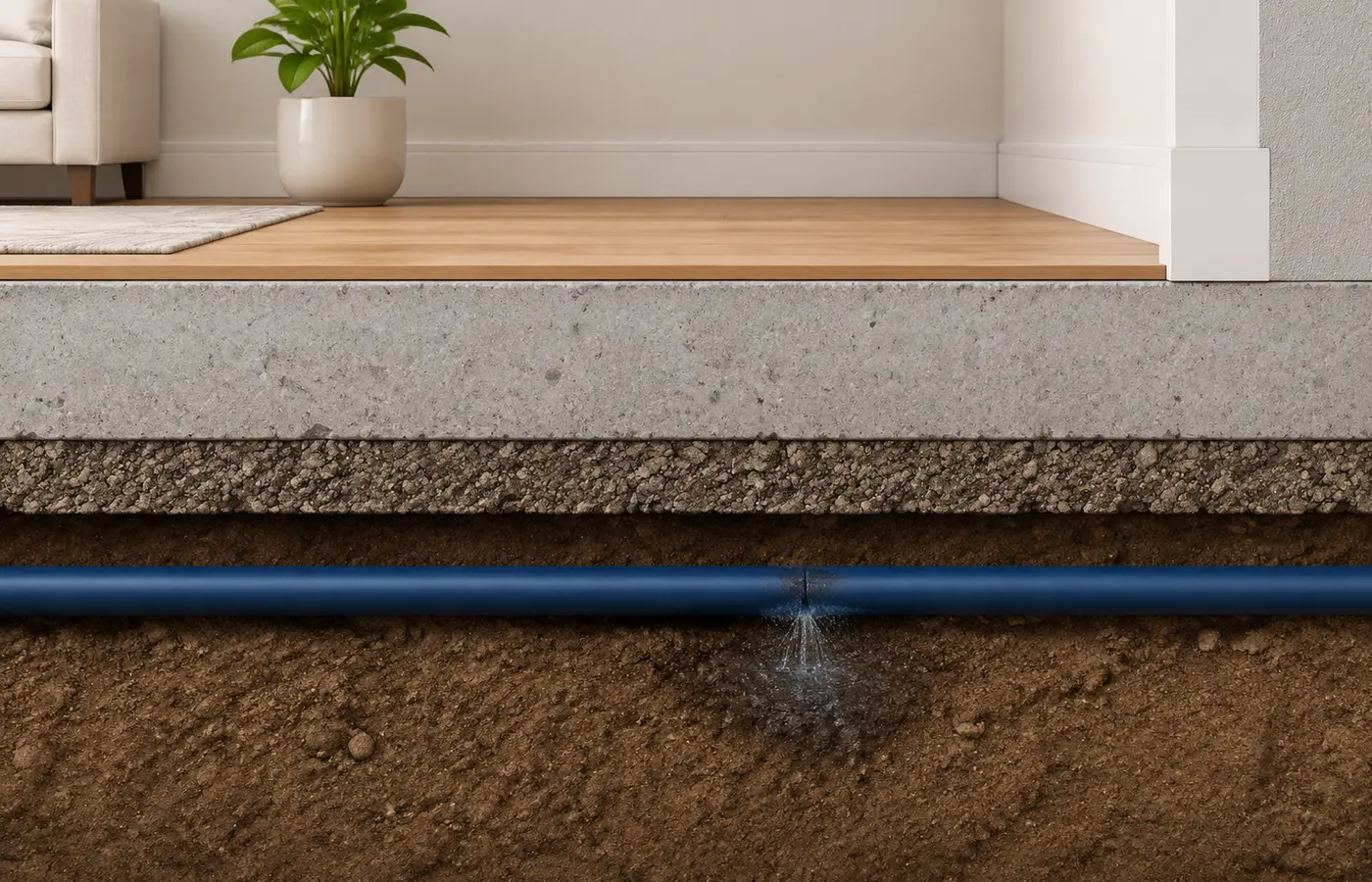
In some slab-on-grade homes, water supply lines run through or beneath the concrete. When one of those lines develops a leak, the first visible sign may appear away from the pipe itself.
That’s part of what makes these leaks harder to notice than a leak in an exposed pipe. An exposed leak usually reveals itself fairly quickly: a wet cabinet floor, a stain spreading across drywall, water pooling somewhere obvious. A line running beneath a slab is covered by flooring and, often, a layer of concrete, so the first signs tend to be indirect — the kinds of things covered above, rather than visible water.
A surface sign may not appear directly above the damaged point because moisture and heat can spread before becoming noticeable. That’s the gap that detection is meant to help close.
What You Can Safely Check Before Calling
Before deciding whether a closer look makes sense, there are a few low-risk observations you can make without specialist tools.
Start by making sure every faucet, hose bib, and water-using appliance in the home is fully off. Then listen — sometimes a faint running-water sound is easier to catch in a quiet house than during the day. Walk through and note exactly where any warmth, dampness, or discoloration is showing up, and roughly how large that area is.
Checking your water meter is one of the more useful things you can do at this stage. With everything off, see whether the meter’s leak indicator or dial is still moving. If it is, that’s a meaningful data point to have ready. It also helps to write down when you first noticed the sign and whether it’s changed — spread, faded, come and gone — since that pattern can matter later.
What you shouldn’t do is try to go further than that on your own. Don’t cut into flooring, open walls, or attempt to work on pressurized plumbing. Don’t climb into a crawlspace or any area that isn’t clearly safe to access. And don’t attempt any of the specialist testing described below — that part is meant to be handled with the right equipment and training.
How Professionals Narrow Down a Slab Leak
Finding a leak that’s hidden under a slab usually isn’t a single-step process. A specialist may use more than one method, depending on the plumbing layout, how much of the home is accessible, background noise levels, and which line is suspected.
Pressure and Isolation Testing
Pressure and isolation testing may be used early in the investigation to check whether an isolated part of the plumbing is losing pressure. That can narrow the affected section of the system, but it doesn’t identify one exact spot on the floor by itself.
Acoustic Listening
Water escaping a pressurized line can create sound, and specialized listening equipment is built to pick that up. How clearly that sound travels depends on a few things: the pipe’s material and depth, what the floor is made of, and how much background noise is present in the home or the surrounding area. Some conditions make this method more useful than others.
Thermal Imaging
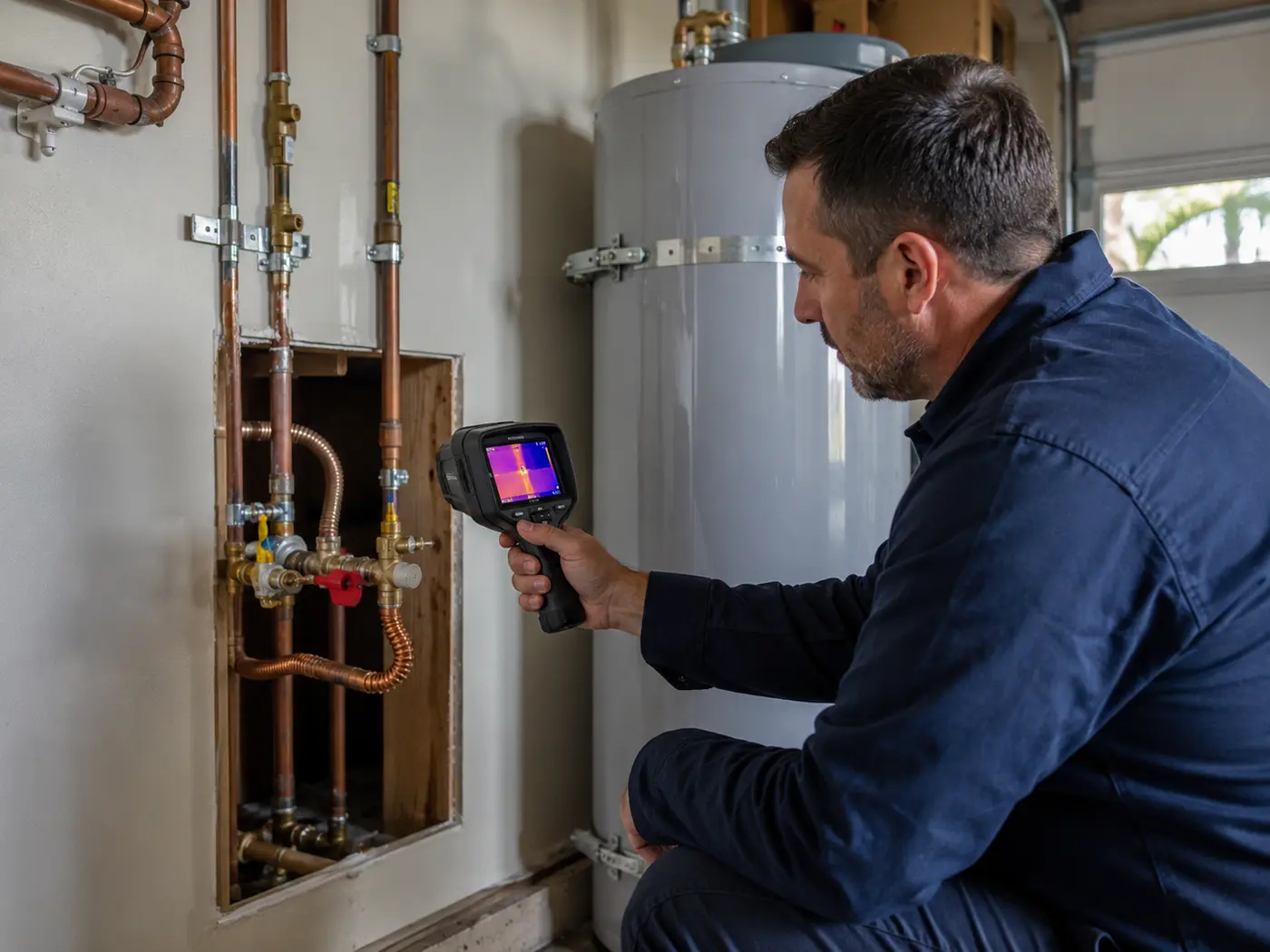
A thermal camera reads differences in surface temperature — it doesn’t see water moving through concrete. When a hot-water line is involved, that temperature difference can sometimes show up on camera and point toward a general area. It works best as one piece of information alongside other findings, not as a standalone answer.
Tracer Gas Testing
After the relevant line is isolated, a specialist may use an approved tracer-gas method to help narrow the suspected location.
Hot-Water and Cold-Water Clues
Which line is involved can change what a homeowner actually notices day to day.
Possible Hot-Water Clues
Localized warmth on a floor can be associated with a hot-water line leak, since escaping hot water tends to carry noticeable heat toward the surface above it. That said, warmth alone doesn’t confirm anything. Direct sun through a window, radiant floor heating where it’s installed, or even a nearby appliance can produce a warm patch that has nothing to do with a leak.
Possible Cold-Water Clues
A cold-water line leak often doesn’t produce any warmth at all. Instead, it may show up mainly through the signs already covered — a rising water bill, a sound of running water, a shift in pressure, or dampness without any noticeable temperature change. That’s part of why a water-use pattern can matter just as much as a physical sensation on the floor.
What a Typical Slab Leak Detection Visit May Involve
- A visit generally starts with a conversation about what’s been noticed — where, when, and how the signs have shown up so far. From there, a technician typically reviews the accessible areas of the home and checks any available meter or shutoff information where it’s appropriate to do so.
- Suitable testing methods are then used based on what that initial review suggests, drawing from the approaches described above. Once testing is complete, findings are generally explained or documented so there’s something concrete to work from afterward.
- The time required can vary with access, the plumbing layout, leak size, background noise, and the methods needed to narrow the location.
What Happens After the Leak Is Located
When testing narrows down a likely area, that doesn’t always mean the exact point of the leak is confirmed. In some cases, additional confirmation or limited access to a section of flooring may still be necessary before anyone can say precisely where the line has failed.
Either way, locating the leak and deciding what to do about it are two separate steps. Choosing to open flooring or move forward with slab leak repair is a decision made after detection, not something that happens automatically as part of it. Detection provides information; any decision about further access or repair is discussed separately.
Detection and Repair Are Separate Decisions
Detection
Detection is aimed at confirming whether a leak is likely present and narrowing down where it’s probably coming from. The goal is useful, specific findings — not a fix.
Repair
Repair addresses the actual damaged line, once the available findings, access requirements, and possible options have been considered. That conversation happens after detection, and it’s a separate decision with its own timeline.
Buena Park Water and Property Resources
A couple of resources from the City of Buena Park can be useful if you want more context on water use or general plumbing questions in the area.
Buena Park WaterSmart covers water-use information for local residents, and the Buena Park Public Works FAQs page answers a range of general questions about the city’s water system.
If you’re trying to understand water leak detection more broadly, or want to know how it works — including what may happen after a request is submitted — those pages go into more detail than makes sense to repeat here.
Common Questions About Slab Leak Detection
Request Help With a Possible Slab Leak
If you’re noticing one or more of the signs above, use the contact page to share where you’ve noticed warmth, dampness, sound, or unexplained water use.
Information you submit may be reviewed and shared with independent service contractors and campaign partners to help respond to your request. Submitting a request does not guarantee a response, service, price, diagnosis, or outcome.