
A CALM, STEP-BY-STEP GUIDE FOR BUENA PARK HOMEOWNERS
How to Check Your Water Meter for a Possible Leak in Buena Park
A water meter can offer a simple starting point when water use seems higher than expected. This guide walks through a basic, non-invasive check and what the result may and may not tell you.
Information you submit may be reviewed and shared with independent service contractors and campaign partners to help respond to your request. Submitting a request does not guarantee a response, service, price, diagnosis, or outcome.
Basic Check at a Glance
One reading is a starting point. It may point toward something worth checking further, but it does not confirm a leak on its own.
Automatic use can affect results. Irrigation timers and water softeners can cause movement that has nothing to do with a leak.
Further checking may help. If a result stays unclear, repeating the observation is a reasonable next step.
What a Water Meter Check Can Tell You
Every water meter tracks how much water passes through the line, and most include a small leak indicator, often a dial or triangle, that moves whenever water is flowing. A basic water meter leak test means watching that reading while no water is intentionally being used.
If the reading changes during that window, it may suggest water is moving somewhere in the system. If nothing changes during that observation, record the result without treating it as proof that no issue exists. This kind of observation is a starting point rather than an answer. It cannot identify where a leak is, what caused it, how serious it might be, or which pipe or fixture is involved. Pairing it with a closer look at fixtures, described later, along with water leak detection methods, can offer a fuller picture.
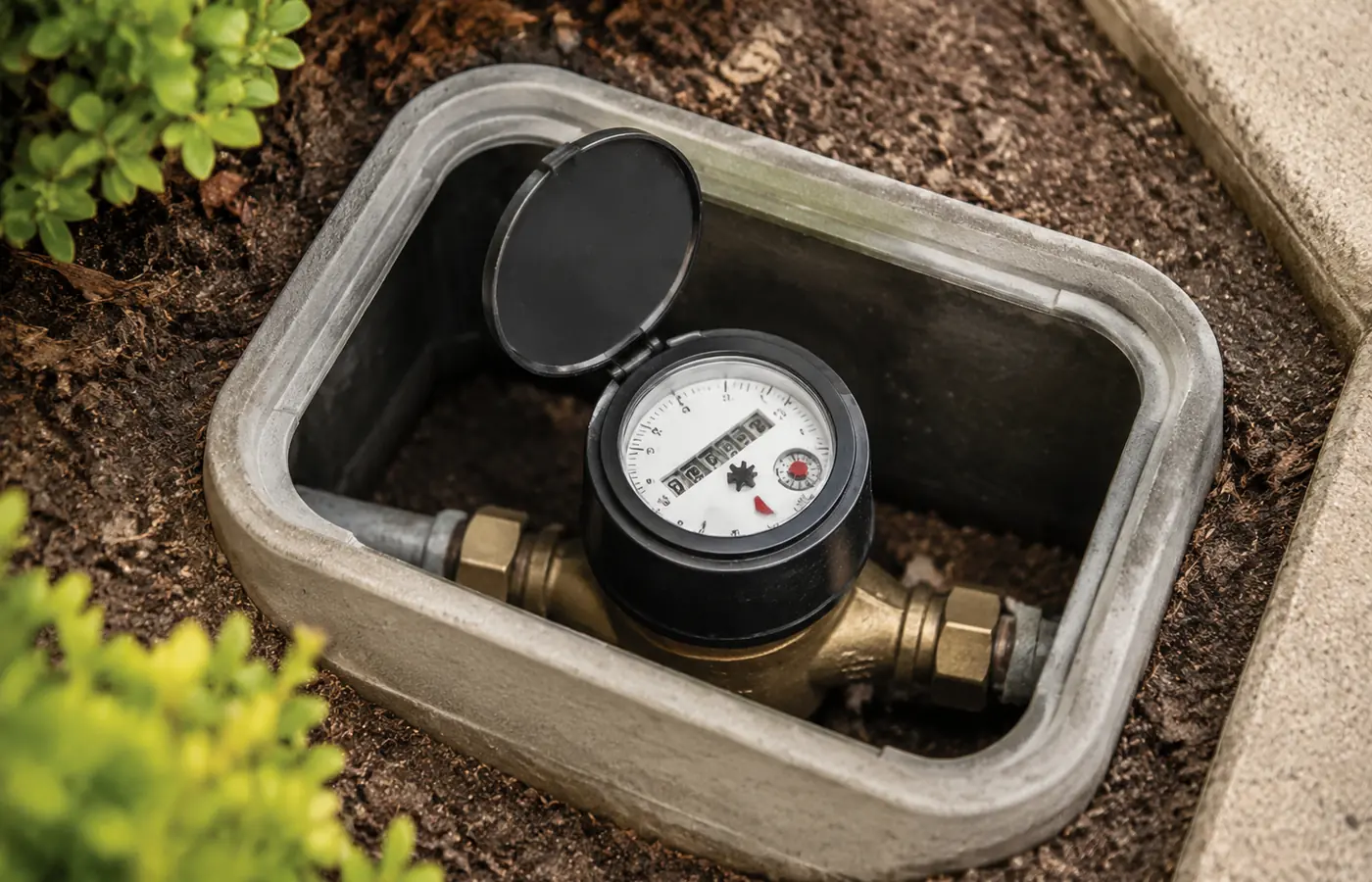
Before You Begin the Check
A few simple steps make a meter check more useful.
Confirm water use has stopped. Check that faucets, hoses, and appliances are fully off before starting.
Consider automatic water use. Toilets, irrigation timers, water softeners, and pool equipment can run on their own schedule.
Let other occupants know. Asking others in the home to avoid using water during the check keeps the reading accurate.
Access the meter safely. Only approach the meter if it is normally and safely accessible without entering an unsafe area.
Leave secured equipment alone. Locked or sealed components should not be forced open, and any city or utility valve should not be operated by a homeowner.
Watch for unsafe conditions. Skip the check, or wait, if the area involves standing water, exposed electrical components, traffic, or anything that does not feel safe.
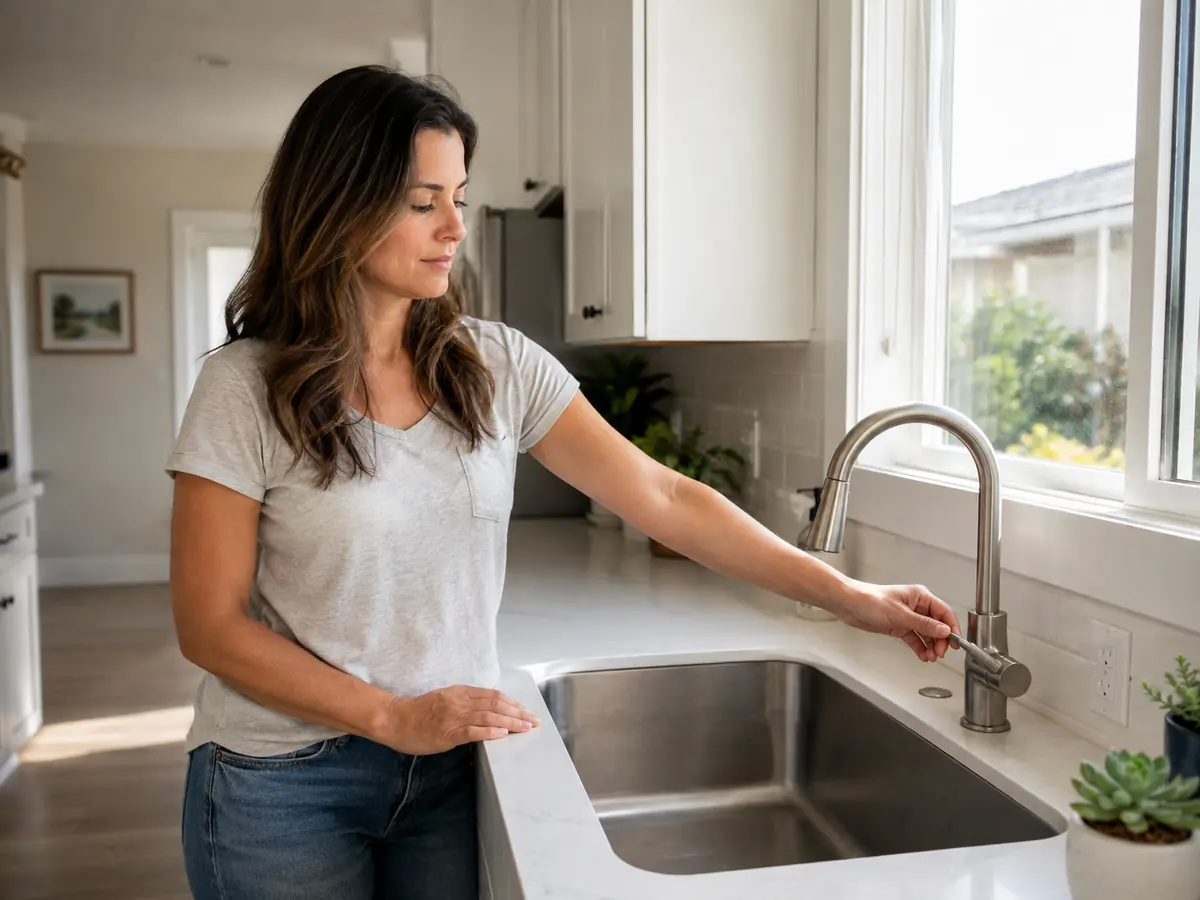
How to Perform a Basic Water Meter Leak Test
With preparation done, the check itself involves four simple steps.
Stop Intentional Water Use
Make sure every faucet, hose, and water-using appliance is off, including things that are easy to forget, like a dishwasher mid-cycle or a hose left running outside.
Record the Starting Reading
Note the meter’s dial or digital display, along with the leak indicator’s position if there is one. A photo or written note both work for comparison later, though a photo should only capture the meter face, not account numbers or other information nearby.
Observe the Meter Without Using Water
Watch the meter, or check back on it, while water stays off. The useful observation period can vary with household water-use patterns and automatic equipment such as irrigation timers or water softeners. There is no single waiting period that fits every household. Nothing here involves opening, adjusting, or modifying the meter or any utility equipment.
Compare What Changed
Compare the new reading to the starting one. A changed reading may be worth investigating further using the sources described later, while a steady reading records no visible change during that observation. Either way, this comparison does not locate or diagnose anything on its own. It simply helps decide whether a closer look makes sense.
What Different Meter Results May Mean
What a result might mean depends on the pattern observed.
No Visible Change
A steady reading records what happened during that particular observation, but it does not rule out every possibility. Some issues appear only under certain conditions or at certain times, so the result should be considered in context.
Continuous Movement
Ongoing movement while everything should be off may point toward checking fixtures, toilets, automatic irrigation, or hidden plumbing more closely. Movement alone does not confirm a hidden leak, but it is a reasonable prompt to look further.
Intermittent or Unclear Changes
Sometimes a reading changes only occasionally, or the result is hard to interpret. This often relates to scheduled equipment rather than a leak, though it can also mean the observation window did not capture enough. Repeating the check with more context can help.
Common Sources of Unexplained Water Use
Several ordinary household sources can affect a meter reading. Each item below is a possibility to consider, not a diagnosis.
Toilets. A running or slowly leaking toilet is one of the more common causes of unexplained water use.
Faucets and fixtures. A fixture that drips slowly or does not fully shut off can add up over time.
Appliances. Dishwashers, washing machines, and similar appliances sometimes cycle water automatically.
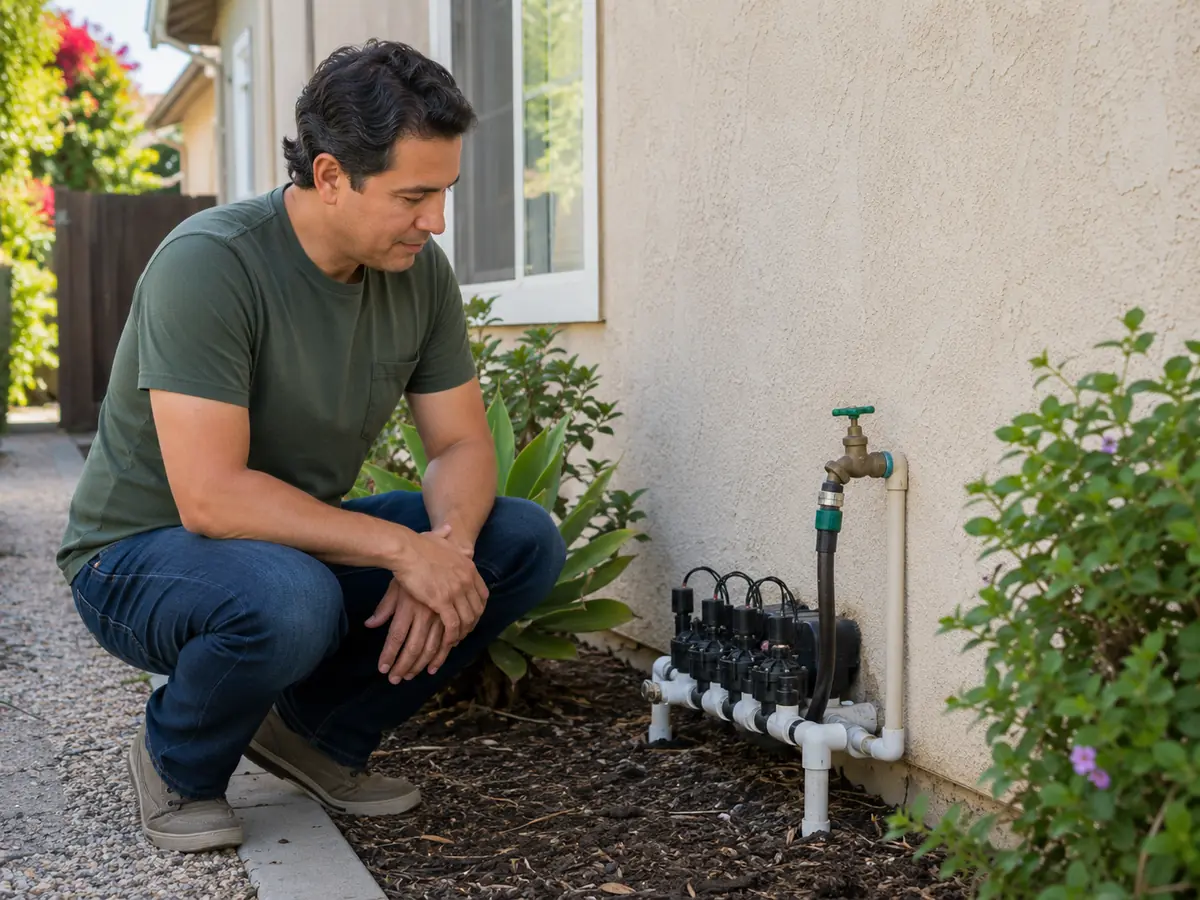
Irrigation and outdoor lines. Sprinkler timers and hose connections can run water outside without it being obvious indoors.
Water heaters and visible connections. Supply lines near a water heater are worth a quick look for moisture or wear.
Hidden interior supply lines. Some lines run behind walls or floors, where a slow issue may not be visible right away.
Under-slab piping. Piping beneath a concrete slab is harder to check directly, and unexplained water use that does not match anything else here is sometimes traced to this area. slab leak detection methods look into that possibility.
What a Meter Test Cannot Identify
A basic meter check is useful as a starting point, but it has real limits. On its own it cannot identify the exact location of a leak, which pipe is affected, what repair method applies, what access is required, who is responsible, or whether repair begins automatically.
Different observations and tests provide different kinds of information. Their usefulness can depend on plumbing layout, materials, location, timing, and surrounding conditions. Findings may need review alongside other observations before a likely source is discussed. how it works gives a broader overview of what may happen after a request is submitted.
WaterSmart and Buena Park Resources
Buena Park offers a couple of official resources that can help alongside a home meter check. Buena Park WaterSmart provides general water-use information, and the Buena Park Public Works FAQs page covers common utility questions. Neither resource diagnoses a private plumbing leak. City infrastructure and private-property plumbing may be handled differently, and the appropriate contact can depend on the location and circumstances involved.
Common Questions About Water Meter Checks
Request Help With Unexplained Water Use
If water use remains unexplained after a basic check, the contact form can be used to share the reading, timing, and other observations.
Information you submit may be reviewed and shared with independent service contractors and campaign partners to help respond to your request. Submitting a request does not guarantee a response, service, price, diagnosis, or outcome.